
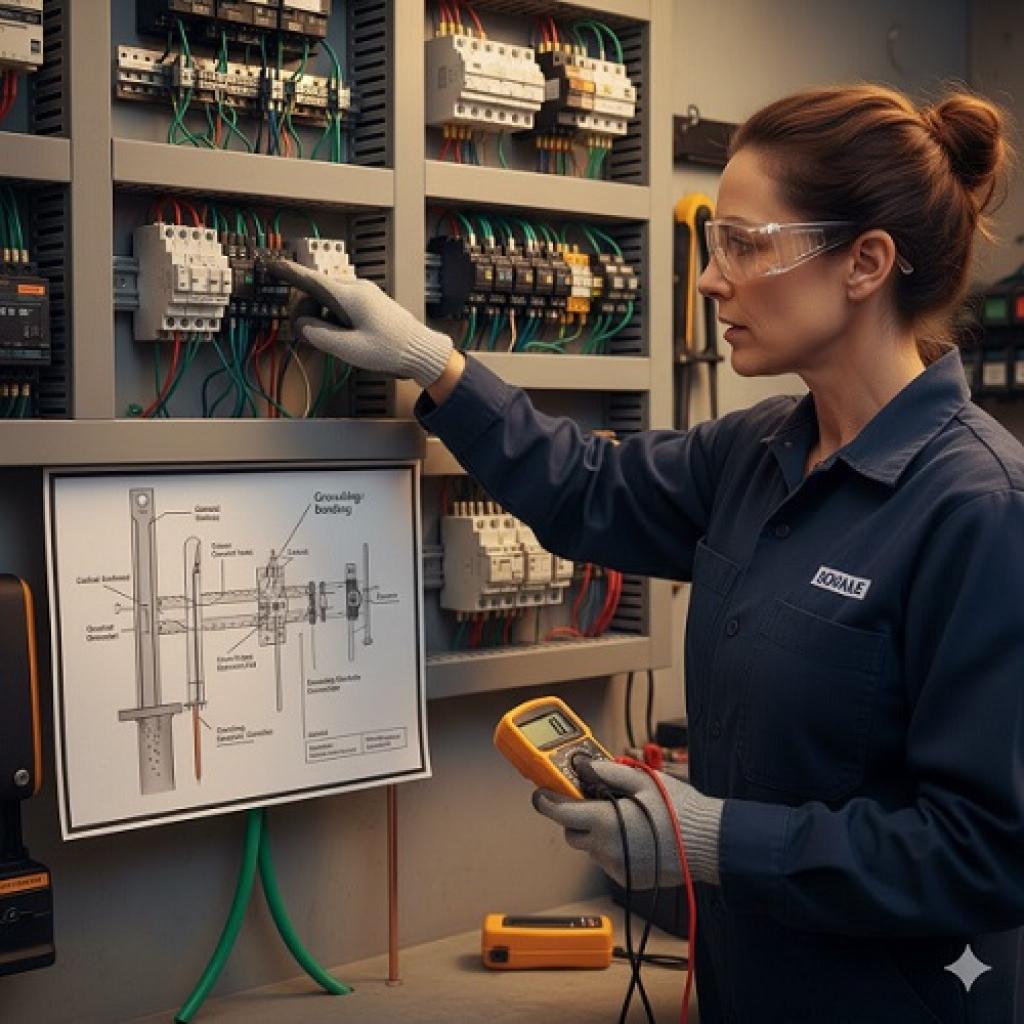
If you’ve ever dealt with random breaker trips or mysterious electrical “tingles” from metal surfaces, the issue may come down to grounding and bonding. At Atomic Electric & Generators Inc., we spend a lot of time fixing problems that trace back to poor grounding or missing bonds—and the good news is, when these systems are done right, your home is safer and your breakers trip less often.
In this guide, we’ll break grounding and bonding down into plain language so you know what they are, why they matter, and when it’s time to call a licensed electrician.
What Is Grounding?
Think of grounding as your electrical system’s emergency escape route.
Every modern electrical system includes a grounding conductor that connects your main panel to the earth—usually via a ground rod, a metal water pipe, or another approved grounding electrode.
Grounding does three big things:
- Provides a low-resistance path for fault current
If a hot wire touches metal or something goes seriously wrong, the fault current has a safe path back to the source through the grounding system. That lets the breaker trip quickly instead of letting that stray electricity stay on metal parts. - Helps stabilize voltage during normal operation
Grounding helps keep your system at a known reference to earth, so voltage stays more stable and less sensitive to spikes. - Reduces the risk of shocks and fire
When fault current is dumped safely to ground and the breaker trips, dangerous conditions are cleared fast, reducing the risk of fire or serious shock.
Grounding alone doesn’t protect you from every shock or nuisance trip issue—but it’s the foundation of a safe system.
What Is Bonding?
If grounding is the escape route, bonding is the hand-holding that makes sure everything travels together.
Bonding means connecting all metal parts that might carry electricity together with a low-resistance path—things like:
- Metal electrical boxes
- Conduit and raceways
- Metal water and gas pipes
- Generator frames and enclosures
- Equipment housings (AC units, pool equipment, etc.)
When everything is properly bonded:
- All exposed metal parts stay at the same electrical potential
- You’re less likely to feel a “tingle” or shock when touching different metal objects
- Faults are more likely to trip the breaker instead of energizing random metal parts
In short: grounding sends electricity to earth, bonding ties all the metal together so nothing becomes a surprise shock risk.
How Grounding and Bonding Reduce Nuisance Trips
“Nuisance trips” are those annoying breaker, GFCI, or AFCI trips that seem to happen for no obvious reason. While some are caused by actual wiring issues or bad devices, poor grounding and bonding can make them happen more often.
Here’s how proper grounding and bonding help:
1. Clearer fault paths = cleaner trips
When a fault occurs (like a damaged wire touching metal), a good grounding and bonding system:
- Gives the fault current a clear, low-resistance path back to the panel
- Helps the breaker see a strong, unmistakable fault current
- Allows the breaker to trip quickly and reset normally once the issue is fixed
If grounding or bonding is missing or loose, you may get:
- Weak, intermittent fault currents
- Weird interactions with sensitive electronics
- Breakers that trip on and off with no obvious pattern
2. Less “noise” on the system
Modern homes are full of sensitive electronics: smart devices, LED lights, chargers, and appliances with circuit boards. Poor grounding and bonding can lead to:
- Electrical “noise” or stray voltages on equipment grounds
- GFCIs or AFCIs interpreting that noise as a ground fault or arc fault
- Devices tripping even when there’s no dangerous condition
A solid grounding and bonding system reduces that noise and helps your protection devices work as intended—not as random trip machines.
3. Better protection for GFCI and AFCI devices
GFCI and AFCI breakers and receptacles are designed to detect very small differences in current. Improper bonding (like bonding neutrals and grounds in the wrong place, or “bootleg grounds”) can confuse these devices and cause:
- GFCIs that trip every time you plug in certain tools
- AFCIs that trip when multiple loads run at the same time
- Outlet circuits that seem “finicky” for no clear reason
Correct bonding in the panel and out in the field gives these devices a clear view of what’s happening so they only trip when they truly need to.
Common Grounding and Bonding Problems in Homes
Here are some issues we regularly see when inspecting homes and generators:
- Loose or corroded ground connections
Ground rods, clamps, and bonding jumpers that are rusted or loose can’t carry fault current effectively. - Missing bonding jumpers
Metal water pipes, gas lines, and other metal systems not bonded to the electrical system can become shock hazards. - Neutrals and grounds tied together in subpanels
Neutrals and grounds should typically only be bonded at the main service disconnect, not in downstream subpanels. Doing it wrong can cause strange currents on metal parts and nuisance trips. - Old two-wire systems with no ground
Older homes with no ground conductor at outlets have limited protection and can be hard on modern electronics and GFCI devices. - Improper generator bonding
Standby and portable generator systems must be grounded and bonded correctly based on how they’re connected. If this is done wrong, you can end up with shocks, nuisance trips, or code violations.
If you suspect any of these issues, it’s time to have your system inspected by a licensed electrician.
How Electricians Check Grounding and Bonding
When Atomic Electric & Generators Inc. inspects your system, we typically:
- Visually inspect the main panel
- Confirm proper neutral-ground bond at the main service (and only there)
- Check grounding electrode conductors and terminations
- Verify that subpanels have isolated neutrals and properly bonded equipment grounds
- Locate grounding electrodes
- Identify ground rods, building steel, or metal water piping used as grounding electrodes
- Check clamps and connections for corrosion or looseness
- Verify bonding of other systems
- Confirm bonding jumpers on metal water piping, gas piping (as required), and major metal systems
- Check equipment bonding on HVAC units, generators, and outdoor equipment
- Test outlet grounding
- Use testing tools to verify that receptacles are properly grounded
- Identify bootleg grounds or unsafe “fixes” that need correction
- Evaluate generators and transfer switches
- Confirm whether the generator is a separately derived system
- Verify bonding and grounding are set up correctly based on the type of transfer switch
For homeowners who want to dive deeper into electrical safety basics, resources like the Electrical Safety Foundation International are also helpful.
Signs You May Have a Grounding or Bonding Problem
Call an electrician if you notice:
- Frequent or unexplained breaker, GFCI, or AFCI trips
- Tingling or small shocks when you touch metal appliances, faucets, or equipment
- Lights flickering when large appliances start
- Old two-prong outlets with no ground in areas where newer devices are plugged in
- A mix of old wiring and newer panels or additions
These don’t automatically mean your home is unsafe—but they’re strong reasons to have your grounding and bonding checked.
When to Call Atomic Electric & Generators Inc.
You shouldn’t have to guess whether your electrical system is safe or live with constant nuisance trips. Proper grounding and bonding:
- Make your home safer
- Help protection devices trip correctly
- Reduce frustrating, unexplained power interruptions
If you’re planning a renovation, adding a standby generator, upgrading your panel, or dealing with constant breaker trips, it’s a smart time to have your system evaluated.
Need help with grounding, bonding, or nuisance trips?
Contact Atomic Electric & Generators Inc. today to schedule an inspection or electrical safety review. We’ll walk you through what we find in plain language and recommend the safest, most cost-effective way to get your system back to doing what it should—quietly, safely, and reliably.