
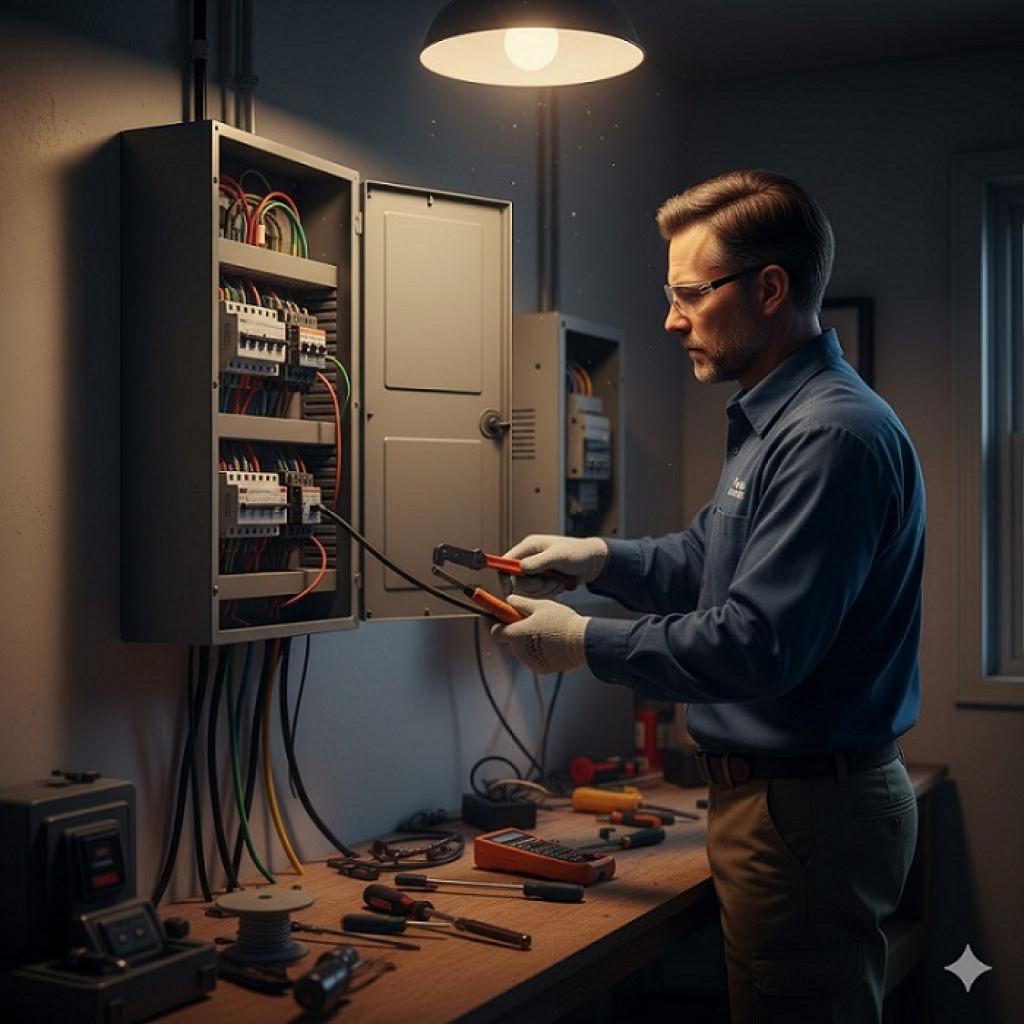
If you’ve been hearing the term electrical panel upgrade more often lately, you’re not alone. As homes add more appliances, EV chargers, and smart devices, the demand on your electrical system increases. Atomic Electric & Generators Inc. regularly helps homeowners figure out when it’s time to upgrade, how much it realistically costs, and what to expect from the process.
In this guide, we’ll break down when you should consider upgrading, what affects the price, and why upgrading your panel is often more about safety than convenience.
What Does an Electrical Panel Upgrade Actually Mean?
Your electrical panel is the “traffic control center” for power in your home. It takes electricity from the utility and distributes it to different circuits: lights, outlets, HVAC, appliances, and more.
An electrical panel upgrade usually means one or more of the following:
- Increasing your service size (for example, from 60A or 100A to 150A or 200A+)
- Replacing an old or damaged panel with a modern breaker panel
- Adding more breaker spaces for additional circuits or future expansion
- Correcting unsafe wiring, code violations, or outdated components
You’re not just swapping a metal box. A proper upgrade can involve service wires, meter base, grounding, and coordination with your local utility.
When Should You Consider Upgrading Your Panel?
You don’t have to guess. There are clear warning signs and life events that point to the need for an upgrade.
1. Your Breakers Trip All the Time
If you’re constantly resetting breakers when you use the microwave and toaster at the same time, that’s a red flag. Frequent tripping can mean the circuits are overloaded or the panel is working at (or beyond) its limits.
2. Your Home Has a Very Old Panel
If your home still has:
- 60-amp service
- A fuse box instead of breakers
- A very old brand known for safety issues
…it’s time to have a licensed electrician inspect it. Old panels were never designed for today’s electrical loads.
3. You’re Adding Major New Loads
These projects almost always trigger the need for a larger service or more breaker space:
- Electric vehicle (EV) chargers
- Hot tubs or spas
- Electric tankless water heaters
- Large additions or finished basements
- Whole-home generators or large HVAC upgrades
If you’re planning a big project, it’s smart to ask Atomic Electric & Generators Inc. to evaluate your panel before you commit to the new equipment.
4. Signs of Damage or Overheating
Any of the following are serious warning signs:
- Rust or corrosion inside the panel
- Buzzing, crackling, or popping sounds
- A burning smell near the panel
- Breakers that feel hot to the touch
If you see or smell anything like this, call a professional immediately. This isn’t a DIY situation.
How Much Does an Electrical Panel Upgrade Cost?
Prices vary based on your home, your local code requirements, and your project scope, but here’s a general idea of what homeowners often see:
- Basic panel replacement (same size, simple swap):
Roughly $1,000 – $2,000+ - Service upgrade (for example, 100A to 200A, with new panel and service wiring):
Often $1,500 – $4,000+ - Complex upgrades (meter relocation, long service runs, trenching, or major code corrections):
Can climb to $4,000 – $6,000+ or more
These are ballpark ranges, not quotes. The only way to get an accurate number is through an in-person evaluation and a written estimate from a licensed electrician.
For more background on how electrical loads and efficiency influence your home’s power needs, you can also review resources like Energy.gov’s home energy information.
What Factors Affect the Cost of a Panel Upgrade?
Several key elements drive the final price:
1. Amperage Size (100A vs. 200A vs. 400A)
Higher amperage panels cost more for equipment and often require heavier-gauge wiring and additional labor. A typical modern home usually benefits from 200-amp service, especially if you have or plan to add electric heat, EV charging, or larger appliances.
2. Condition of Existing Wiring and Equipment
If your current setup is relatively modern and in decent shape, the electrician may be able to reuse some components. If the wiring is brittle, undersized, or unsafe, more materials and labor will be required to bring everything up to code.
3. Location of the Panel
Panels located in tight, inaccessible, or non-compliant areas (like certain closets) may have to be relocated. Moving the panel can mean:
- Extending or rerouting branch circuits
- Running new conduit or cable
- Making drywall repairs after the work is done
All of this adds to cost and time.
4. Utility and Permit Requirements
Upgrading the panel almost always requires:
- Electrical permits
- Inspections
- Coordination with the power company to disconnect and reconnect service
Permit fees, utility scheduling, and required inspections can affect both your timeline and your total price.
5. Additional Work Done at the Same Time
Many homeowners choose to bundle other work with a panel upgrade, such as:
- Adding dedicated circuits for appliances
- Installing surge protection
- Upgrading grounding and bonding
- Adding outdoor or garage outlets
This can increase the upfront price but often saves money versus doing each item separately later.
Why an Electrical Panel Upgrade Is Worth the Investment
It’s understandable to look at a couple thousand dollars and ask, “Is it really necessary?” In many cases, the answer is yes — and here’s why.
1. Safety First
Your electrical system’s main job is to safely deliver power. An overloaded, outdated, or damaged panel increases the risk of:
- Overheating
- Arcing
- Electrical fires
Upgrading the panel and related components reduces that risk and helps protect your family and your home.
2. Better Reliability and Fewer Nuisance Trips
A right-sized, properly installed panel will:
- Handle your home’s real-world electrical load
- Reduce random breaker trips
- Allow you to actually use your home the way you want
No more playing “breaker roulette” every time you run the dryer and oven at the same time.
3. Room to Grow
A modern panel with more spaces means you’re ready for:
- A future kitchen remodel
- EV charger
- Finished basement or bonus room
- Outdoor kitchen, hot tub, or workshop
Instead of maxing out every breaker slot, you’ll have a system designed to grow with you.
4. Potential Home Value and Marketability
Buyers and home inspectors notice old, undersized, or questionable panels. A recent, properly permitted electrical panel upgrade can be a selling point and may prevent last-minute surprises during a home sale.
What to Expect During a Panel Upgrade
Here’s a typical timeline when you work with a licensed contractor like Atomic Electric & Generators Inc.:
- Site Visit & Evaluation
- Inspect existing panel and wiring
- Discuss your current and future electrical needs
- Confirm code and utility requirements
- Written Estimate
- Clear pricing for labor, materials, permits, and any additional work
- Scope of work spelled out, so you know exactly what’s included
- Scheduling & Utility Coordination
- Schedule a day for power to be turned off and upgraded
- Your power will be out for several hours while the work is completed
- Installation Day
- Remove old panel and related components
- Install new panel, breakers, and connections
- Upgrade grounding and bonding as needed
- Label circuits clearly
- Inspection & Power Restoration
- City or county inspector signs off on the work
- Utility reconnects service
- Your home is powered back up with a safer, more reliable system
Ready to Talk About Your Electrical Panel?
If you’re dealing with frequent breaker trips, planning a major renovation, or you know your panel is decades old, it’s the perfect time to ask about an electrical panel upgrade.
Atomic Electric & Generators Inc. can walk you through your options, explain the true costs for your home, and give you a straightforward, no-pressure estimate. That way, you can decide with confidence whether now is the right time to upgrade your electrical panel.