
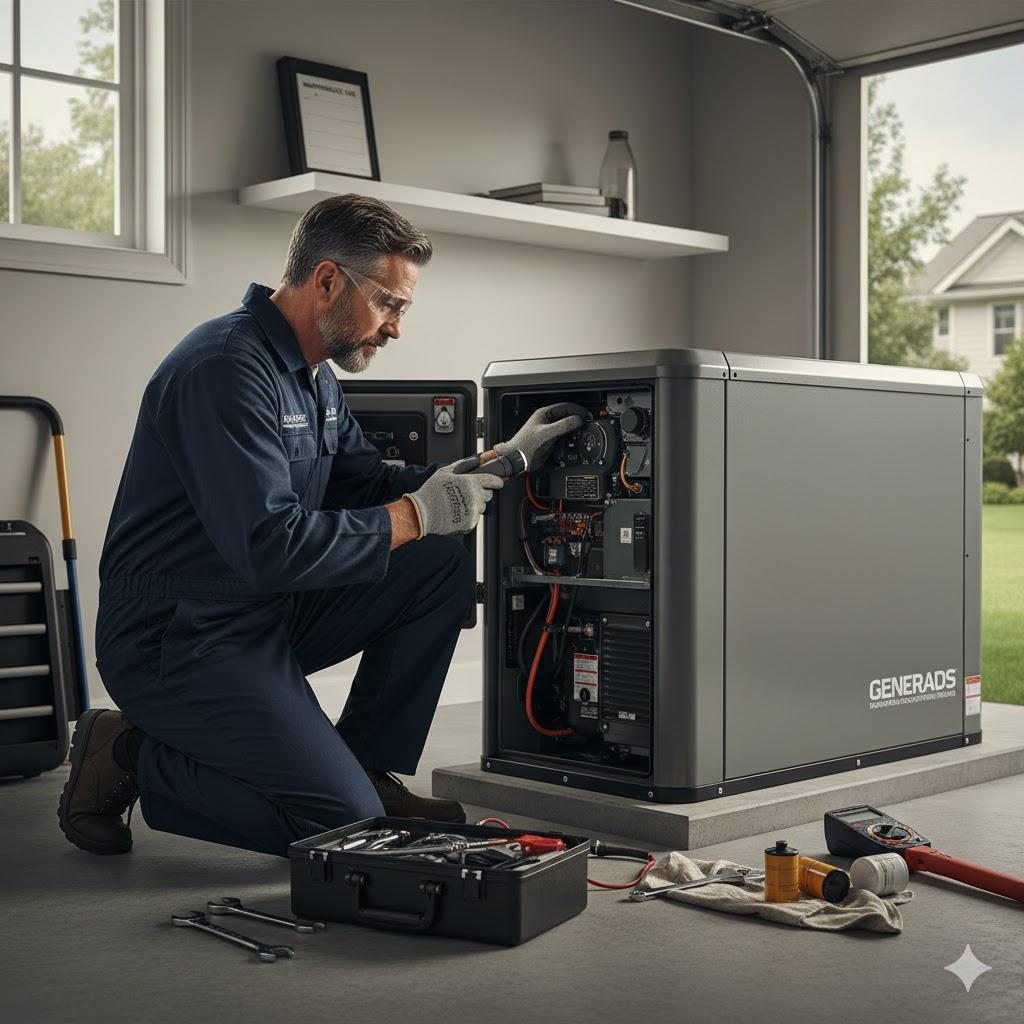
Your standby generator is like an insurance policy for your home or business. You hope you never need it, but when you do, it has to work instantly.
Without regular maintenance:
- Batteries can die.
- Fuel can go bad.
- Sensors can fail without warning.
- Small issues can turn into expensive repairs.
A clear maintenance schedule:
- Reduces the risk of failure during an outage.
- Extends the life of your generator.
- Keeps your warranty valid (many manufacturers require routine service).
- Gives you peace of mind before storm season or known high-risk periods.
Think of your schedule as a checklist that makes reliability automatic.
Before You Start: Read the Manual and Stay Safe
Every generator model is different. Before you do anything, review your owner’s manual for model-specific instructions and recommended maintenance intervals.
A few safety basics:
- Always turn off the generator and let it cool down before working on it.
- Never work on electrical components if you’re unsure—call a licensed electrician.
- Keep the area around your generator clear of debris and flammable materials.
- For general generator safety tips, the U.S. Department of Energy shares guidance on its website.
Once you understand the basics, you can use the schedule below as a starting framework.
Weekly Maintenance Tasks
These are quick checks you can do in just a few minutes:
1. Visual Inspection
Walk around the generator and look for:
- Leaks (oil, fuel, coolant).
- Loose wires or connections.
- Rodent nests, leaves, or debris inside the enclosure.
- Rust, corrosion, or visible physical damage.
Catching these early often prevents a breakdown later.
2. Check the Control Panel
Most standby generators have a simple display that shows:
- Current status (auto, off, or fault).
- Any warning or error messages.
Make sure your generator is set to AUTO so it will start when the power goes out.
3. Confirm the Exercise Cycle
Many standby generators are programmed to run automatically once a week for a few minutes.
- Listen for the test run at the scheduled time.
- If it doesn’t start, check the control panel for errors.
This weekly “exercise” keeps internal components lubricated and alerts you to problems before an emergency.
Monthly Maintenance Tasks
Once a month, go a little deeper:
1. Check Fluid Levels
- Engine oil – Use the dipstick to confirm it’s within the recommended range.
- Coolant (if applicable) – Verify the level in the reservoir.
- Fuel – For liquid-fueled units, make sure there’s enough fuel and no obvious contamination.
Top off fluids as recommended in the manual and use only approved products.
2. Inspect the Air Filter
Remove the air filter cover and check:
- Is the filter dirty, clogged, or oily?
- Are insects or debris blocking airflow?
Light dust can sometimes be gently tapped out, but replace the filter if it looks heavily soiled.
3. Test the Battery
A weak battery is one of the most common reasons a generator won’t start.
- Check that the terminals are clean and tight.
- Look for corrosion (white or green buildup) on the posts.
- If you have a multimeter and know how to use it, verify voltage is within the recommended range.
If the battery is more than a few years old, consider replacing it proactively.
Quarterly or Semi-Annual Maintenance Tasks
Every 3–6 months, it’s time for a more thorough check. This is often where having a professional maintenance visit makes sense.
1. Change the Oil and Oil Filter
Depending on run time and manufacturer recommendations, oil changes are usually done:
- After the first 20–30 hours on a brand-new unit.
- Every 100–150 hours of operation or at least once a year.
If your generator has run during long outages, you may need to change the oil more frequently.
2. Inspect the Spark Plugs
Remove and inspect the spark plugs:
- Look for heavy carbon buildup, cracks, or wear.
- Replace any plug that looks questionable or is past the recommended service interval.
Good spark plugs help your generator start quickly and run efficiently.
3. Check the Fuel System
For natural gas or propane units, a licensed technician should:
- Inspect fuel lines for leaks or damage.
- Verify proper gas pressure and regulator operation.
For diesel or gasoline units:
- Check for algae growth, water, or sediment in the tank.
- Consider using fuel stabilizer if the generator rarely runs.
Annual Professional Inspection
Even if you’re diligent with basic tasks, a yearly professional inspection is essential. A qualified technician can:
- Perform a full load test to make sure the generator carries power properly.
- Verify voltage and frequency outputs are within spec.
- Check transfer switch operation (how your system switches from utility power to generator power).
- Inspect internal wiring, sensors, and safety shutoffs.
- Update firmware or controller settings if needed.
This is also a great time to review your usage over the past year and discuss any issues you noticed with a professional.
After Every Outage: Post-Run Checks
Whenever your generator has run for several hours or days:
- Let it cool, then check the oil level and top off if needed.
- Inspect for any leaks or unusual noises that developed during the run.
- Note the total run time so you can schedule your next oil change accurately.
- Make sure the unit is set back to AUTO once utility power is restored.
Treat every extended outage as a reminder to perform a mini checkup.
Building Your Own Maintenance Checklist
To make standby generator maintenance easy, create a simple checklist and keep it:
- Taped inside the generator enclosure door (if safe and dry).
- Saved as a note on your phone.
- Printed and stored with your manual.
Your checklist might include:
- Weekly: Visual check, status, exercise run.
- Monthly: Oil level, battery, air filter.
- Quarterly: Fuel system inspection, connection checks.
- Annual: Professional inspection, load test, full service.
Mark dates and what you did each time. This record is useful for warranties, resale value, and diagnosing future issues.
When to Call a Professional
Some warning signs mean it’s time to stop DIY and call in experts:
- Generator won’t start or keeps shutting off.
- Visible leaks you can’t easily identify.
- Strong fuel smells around the unit.
- Alarms or fault codes on the control panel.
- Unusual noises, vibrations, or smoke during operation.
Partnering with a specialized company like Atomic Electric & Generators Inc. ensures that complex problems are handled correctly and safely. They can also set up a recurring maintenance plan so your generator is serviced on a regular schedule without you having to remember every detail.
Final Thoughts: Keep Backup Power Ready, Not Lucky
Your standby generator is there for the moments you can’t predict—storms, grid failures, equipment issues across town. The difference between “we got through it” and “we lost everything in the freezer and sat in the dark” often comes down to your maintenance routine.
By following a clear schedule, staying on top of simple checks, and trusting professionals for deeper inspections, you’ll keep your backup power:
- Ready to start
- Safe to run
- Reliable for years to come
If you haven’t looked at your generator in a while, today is the perfect time to begin your maintenance checklist and make sure your backup power is truly ready when you need it most.