
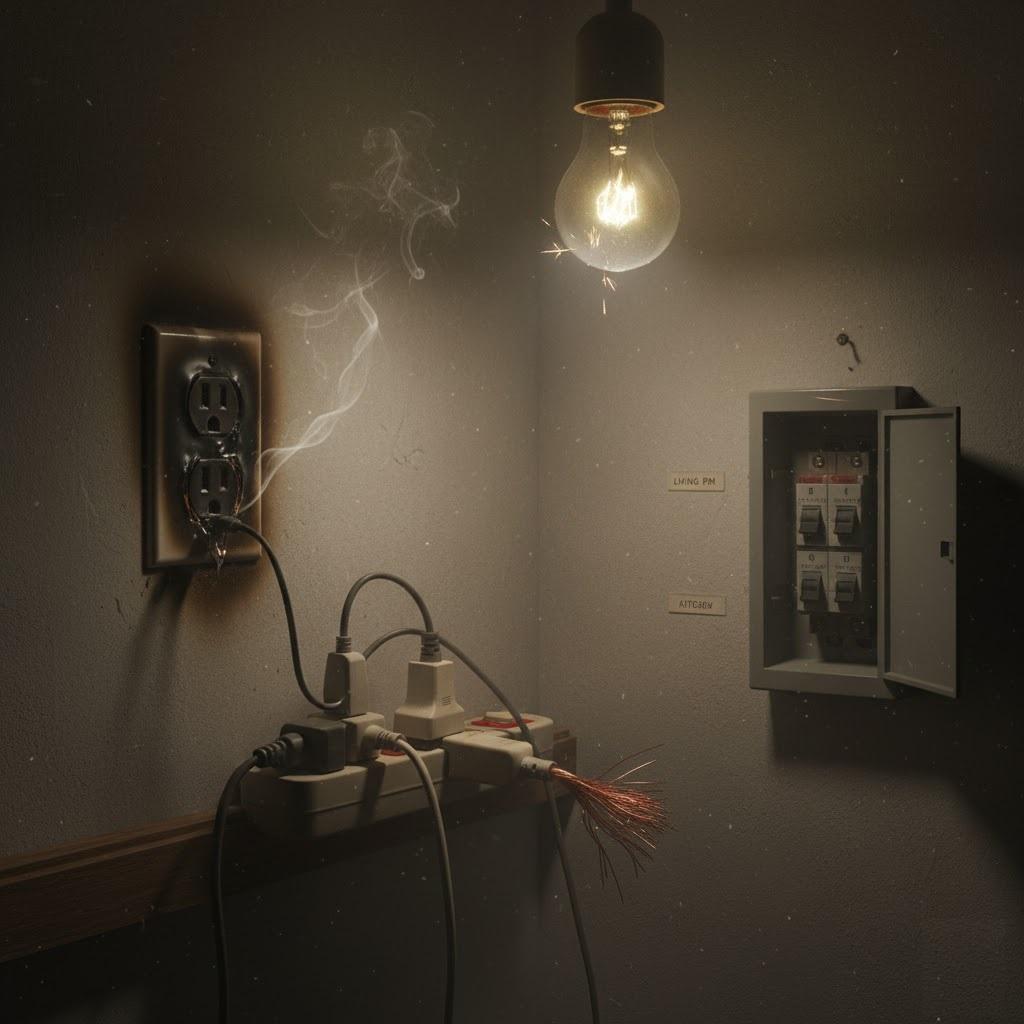
If you’ve ever wondered whether that flickering light or warm outlet is “normal,” you’re not alone. Many homeowners miss early signs of faulty electrical wiring, and small issues can turn into serious safety hazards over time. At Atomic Electric & Generators Inc., we help homeowners spot problems early so they can fix hazards before they lead to shocks, damaged devices, or even electrical fires.
Below are 15 warning signs you should never ignore—and what to do if you notice them.
1. Frequent Breaker Trips
Circuit breakers are designed to protect your home by shutting off power when there’s an overload or short. If a breaker trips once in a blue moon, it’s probably doing its job. But if the same breaker trips repeatedly, that often signals an overloaded circuit, loose wiring, or a deeper electrical issue that needs professional attention.
2. Flickering or Dimming Lights
If your lights flicker or dim when you turn on a major appliance—like a microwave, space heater, or AC unit—that’s a sign your circuits may be overloaded or wiring connections are loose. Lights should remain steady. Regular flickering is a red flag that your system isn’t handling your home’s power demands properly.
3. Warm, Hot, or Discolored Outlets and Switches
Outlets and switches should never be warm or hot to the touch. If you see discoloration, yellowing, or brown marks on the cover plates, it may mean the wiring behind them is overheating. This is a serious warning sign and should be checked immediately by a licensed electrician.
4. Burning Smell or Scorched Odors
A faint burning or “hot plastic” smell with no obvious source is a major concern. If you notice this near outlets, switches, or your electrical panel, turn off power to that area (if safe to do so) and call an electrician right away. Burning smells can indicate melting insulation or wiring about to fail.
5. Buzzing, Crackling, or Sizzling Sounds
Electricity should run silently. If you hear buzzing, crackling, or sizzling from outlets, switches, or your panel, that may signal loose connections, arcing, or damaged components. Don’t ignore strange electrical noises.
6. Outlets That Spark When You Plug In
A tiny, quick blue spark can sometimes be normal when plugging in a device. But large, frequent, or loud sparks are not. If you see flashes, hear popping sounds, or feel heat, it could mean the outlet is worn out, loose, or wired incorrectly.
7. Frequent Bulb Burnouts
If bulbs burn out faster than they should—especially in the same fixture—there may be an issue with the wiring, the fixture itself, or voltage that’s too high. Using the wrong wattage bulb can also cause problems. Either way, frequent burnouts are a sign something isn’t right.
8. Two-Prong Outlets in an Older Home
Older two-prong (ungrounded) outlets don’t have the safety grounding modern devices need. While not a “fault” by itself, they often indicate older wiring behind the walls that may be undersized, fragile, or out of code. If you still have many two-prong outlets, your home might benefit from an electrical evaluation and targeted upgrades.
9. Loose Outlets or Switches
If an outlet wiggles when you plug something in, or a switch feels loose or crunchy when you use it, there may be a problem with the device or the wiring behind it. Loose connections can cause arcing and heat buildup over time, increasing the risk of fire.
10. Shocks or Tingles When Touching Devices
You should never feel a shock, tingle, or “buzzing” sensation when touching an appliance, metal surface, or outlet. Even a mild shock can be a sign of improper grounding, damaged wiring, or a faulty device. This is not something to “get used to”—it’s a safety hazard.
11. Extension Cords Everywhere
If you rely on extension cords and power strips in multiple rooms, it might mean your home doesn’t have enough outlets or circuits for your needs. This increases the risk of overloads and overheating. A better solution is to add circuits and outlets where you actually use power.
12. Frequently Warm Power Cords and Plugs
Power cords and plugs that feel hot—beyond a mild warmth—could be overloaded or connected to faulty wiring. If you notice heat, discoloration, or a plastic smell from cords and plugs, unplug the device and have the outlet and circuit inspected.
13. Aluminum Wiring in Older Homes
Some homes built in the 1960s and 1970s used aluminum wiring. Over time, aluminum can expand, contract, and loosen at connection points, increasing the risk of overheating and arcing if it hasn’t been properly updated. If you suspect you have aluminum wiring, a licensed electrician can recommend safe correction options.
14. Outdated or Overloaded Electrical Panel
If your home still uses screw-in fuses, an old 60-amp panel, or a panel that’s completely full with no room for new breakers, your electrical system may be stretched beyond its limits. Modern homes with HVAC, EV chargers, hot tubs, and more often need upgraded panels and additional capacity to safely handle today’s loads.
15. Tripped GFCI or AFCI Outlets and Breakers
Ground Fault Circuit Interrupter (GFCI) and Arc Fault Circuit Interrupter (AFCI) devices are designed to trip when they detect unsafe conditions. If the same GFCI or AFCI outlet or breaker keeps tripping, it might be protecting you from a real wiring issue, not just being “sensitive.” This deserves a professional look.
What to Do If You Notice These Warning Signs
If any of these signs sound familiar, don’t panic—but don’t ignore them either. Here’s what you can do:
- Stop using suspicious outlets or devices until they’re checked.
- Make a list of what you’ve noticed (which outlets, which rooms, when it happens).
- Call a licensed electrician to inspect your wiring, outlets, and panel.
For general safety information, you can also review homeowner resources from organizations like the Electrical Safety Foundation International, but remember that online advice is no substitute for an in-person inspection of your home.
How Atomic Electric & Generators Inc. Can Help
At Atomic Electric & Generators Inc., we inspect, diagnose, and repair wiring issues before they become bigger, more expensive problems. Our licensed electricians can:
- Check your outlets, switches, and wiring for damage or overheating
- Test your electrical panel and breakers for safe operation
- Add new circuits and outlets where you need them most
- Upgrade old panels and wiring to meet current safety standards
- Recommend surge protection and backup power options
We’ll walk you through what we find in clear, simple language—no scare tactics, no confusing jargon. You’ll know exactly what’s urgent, what’s optional, and what will help keep your home safer and more reliable long term.
Don’t Wait for a Big Problem to Show Up
Most electrical fires and serious wiring issues start with small, easy-to-miss warning signs. By paying attention to the signs of faulty electrical wiring and acting early, you protect your family, your home, and your peace of mind.
If you’ve noticed flickering lights, hot outlets, strange smells, or other issues on this list, schedule an electrical safety inspection with Atomic Electric & Generators Inc. today. A quick visit now can prevent a costly—and potentially dangerous—problem later.