
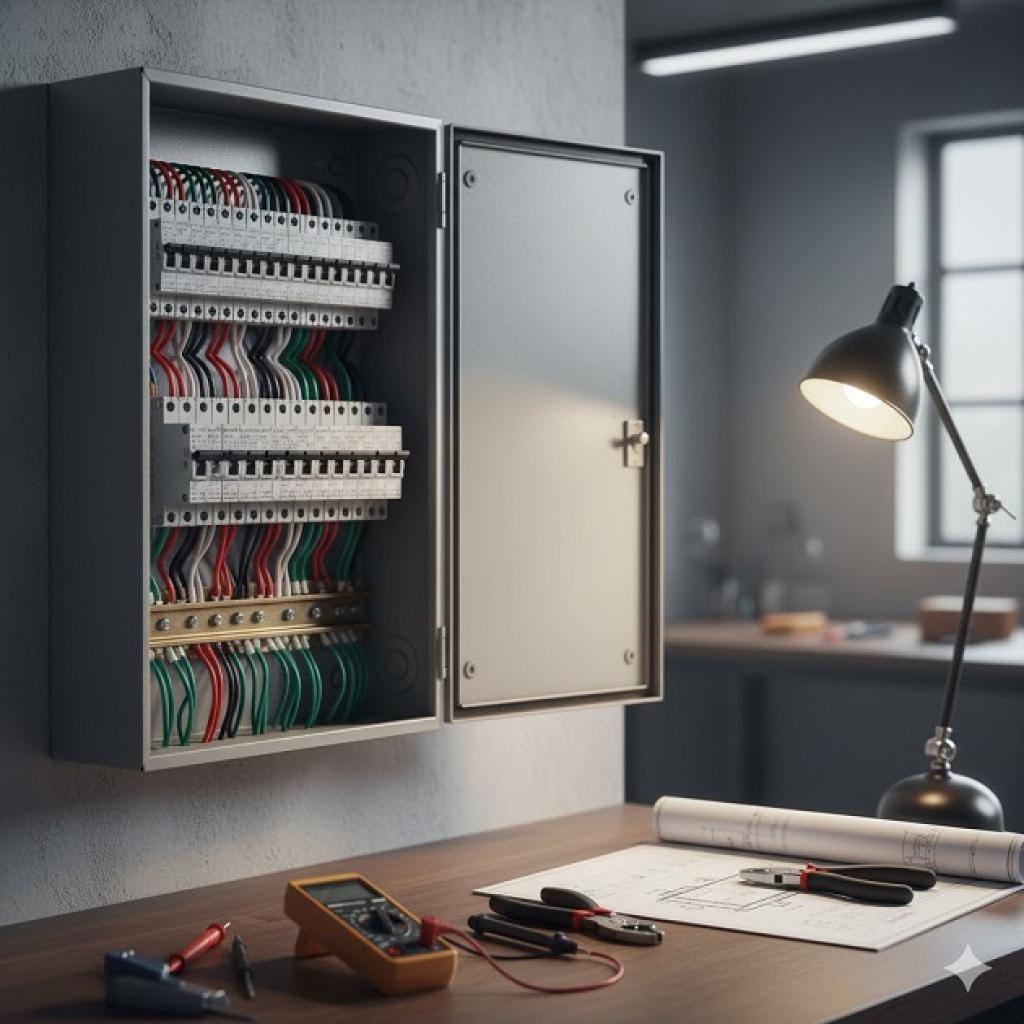
If you’re like most homeowners, you probably don’t think about your electrical panels until something trips, flickers, or fails. But your panel is the heart of your home’s electrical system, and when it’s outdated or overloaded, it can become a real safety concern. At Atomic Electric & Generators Inc., we help homeowners understand what’s happening behind the cover, when repairs are enough, when it’s time to upgrade, and what kind of costs to expect.
In this guide, we’ll break everything down in plain language so you can make smart, confident decisions about your home’s power.
What Does an Electrical Panel Do?
Your electrical panel is the central “traffic controller” for electricity in your home. Power comes in from the utility company, passes through the main breaker, and is then distributed to individual circuits throughout the house.
Most modern electrical panels include:
- Main breaker – Shuts off power to the entire home.
- Individual circuit breakers – Control and protect each circuit (kitchen, bedrooms, HVAC, etc.).
- Bus bars – Metal bars that carry electricity from the main breaker to the individual breakers.
- Neutral and ground bars – Provide safe return paths for electricity and help protect against faults.
- Panel enclosure – The metal box that keeps everything contained and protected.
When everything is sized correctly and working properly, you get consistent power without nuisance tripping, overheating, or flickering lights.
Common Electrical Panel Problems
Over time, electrical panels can develop issues—especially in older homes or homes that have added more electrical demand (new appliances, hot tubs, EV chargers, etc.).
Here are some common problems:
- Frequent breaker trips – Often a sign the circuit is overloaded or there’s a problem with wiring or a device.
- Warm or hot panel – A serious warning sign that requires professional attention.
- Rust or corrosion inside the panel – Moisture and corrosion can compromise connections and safety.
- Burning smell or scorch marks – Could indicate arcing or overheating connections.
- Old or obsolete panels – Some older brands and fuse panels are known safety risks and should be replaced.
If you’re seeing any of these issues, it’s time to have a licensed electrician inspect your panel—this is not a DIY project.
Repair vs. Replace: How to Decide
Not every panel issue calls for a full upgrade. Sometimes a targeted repair is all you need. Other times, replacing the panel is the safer and more cost-effective long-term solution.
Repairs may be enough when:
- A single breaker is faulty and needs to be replaced.
- A loose connection needs tightening or rewiring.
- There’s minor corrosion that can be cleaned up and properly treated.
- You’re adding a small load and have spare breaker space and capacity.
An upgrade or full replacement is usually the better choice when:
- Your panel is undersized for your home’s current electrical demands.
- You have a 60-amp or 100-amp service and need more capacity for modern appliances.
- The panel is very old, uses fuses, or is a brand known for safety issues (like certain recalled or obsolete panels).
- You’re doing a major renovation, adding a new HVAC system, or planning for EV chargers, hot tubs, or backup generators.
- There are repeated issues like overheating, burning smells, or visible damage.
At Atomic Electric & Generators Inc., our electricians will walk you through both options—repair and replacement—so you understand the pros, cons, and long-term safety implications.
When Does It Make Sense to Upgrade Your Electrical Panel?
Upgrading your electrical panel is like upgrading the backbone of your home’s power system. Here are the most common reasons homeowners choose to upgrade:
- You’re Adding Major Appliances or Systems
New HVAC systems, double ovens, tankless water heaters, and EV chargers draw a lot of power. Your existing panel may not have enough capacity or available breaker space. - You’re Renovating or Adding Square Footage
A new addition, finished basement, or remodeled kitchen often requires new circuits. This is the perfect time to upgrade your panel so you’re not patching onto an already overloaded system. - You Want Better Safety & Code Compliance
Older panels may lack modern safety features like AFCI (arc-fault) or GFCI (ground-fault) protection on key circuits. Upgrading can help bring your home closer to current electrical standards. - You Plan to Install a Standby Generator
If you’re investing in backup power, a panel upgrade—or a new transfer switch and subpanel—might be needed so your generator integrates safely and smoothly with your home’s system. - You’re Tired of Constant Breaker Trips
Frequent trips aren’t just annoying; they’re often a sign of circuits running beyond their safe capacity. A new panel with more space and capacity can help eliminate the problem.
How Much Does It Cost to Repair an Electrical Panel?
Panel repairs can vary in cost depending on what’s wrong, but here’s a general idea:
- Replacing a single breaker: Typically in the low hundreds, depending on the breaker type and labor.
- Tightening connections and minor repairs: Also typically in the low hundreds, especially if caught early.
- Replacing multiple breakers or addressing moderate corrosion: Costs climb as parts and labor increase, but still usually less than a full upgrade.
Repairs make the most sense when the panel is otherwise in good condition and has enough capacity for the home.
How Much Does It Cost to Upgrade an Electrical Panel?
A full electrical panel upgrade is a more significant investment, but it also delivers greater long-term safety and flexibility.
Factors that affect the upgrade cost include:
- Panel size (amperage) – Upgrading from 100 amps to 200 amps will cost more than a lateral move from an old 200-amp panel to a new one.
- Condition of existing wiring – If your home’s wiring is in good shape, costs stay lower; outdated or unsafe wiring can increase the scope and price.
- Meter and service upgrades – Sometimes the utility service or meter base must be upgraded as well.
- Local permits and inspections – Required by code and built into total project cost.
- Additional work – Adding circuits, replacing outdated outlets, or adding surge protection at the same time.
The best way to get an accurate number is a professional on-site assessment. Our team at Atomic Electric & Generators Inc. provides clear, upfront pricing so there are no surprises.
What Impacts Long-Term Value?
When you invest in a panel upgrade, you’re not just paying for a box and breakers. You’re paying for:
- Improved safety – Lower risk of electrical fires and overheating.
- Better reliability – Fewer trips, flickers, and mysterious outages.
- Room for future upgrades – EVs, hot tubs, workshops, and more.
- Potential resale benefits – Buyers and inspectors like to see modern, properly sized panels.
It’s one of those upgrades that quietly supports everything else in your home—from comfort systems to smart technology.
Why Work with a Licensed Electrician?
Electrical panels are not a DIY area. Working inside a panel exposes you to live power and serious shock, arc, and fire risks if something is done incorrectly.
A licensed electrician will:
- Evaluate your current panel capacity and condition
- Calculate your home’s electrical load
- Recommend the right panel size and configuration
- Install everything to current electrical code
- Coordinate permits and inspections with your local authority
For a helpful safety overview on home electrical systems, you can also review resources from the Electrical Safety Foundation International (outbound link).
Ready to Talk About Your Electrical Panel?
If you’re dealing with frequent breaker trips, planning a renovation, or wondering whether your panel is still safe for today’s power demands, we’re here to help.
Visit Atomic Electric & Generators Inc. to learn more about our electrical services and schedule a professional panel assessment. Our licensed electricians will inspect your current setup, explain your options in plain English, and give you upfront pricing for any repairs or upgrades.
Your electrical panel doesn’t have to be a mystery. With the right information and a trusted electrician on your side, you can keep your home powered safely and confidently for years to come.