
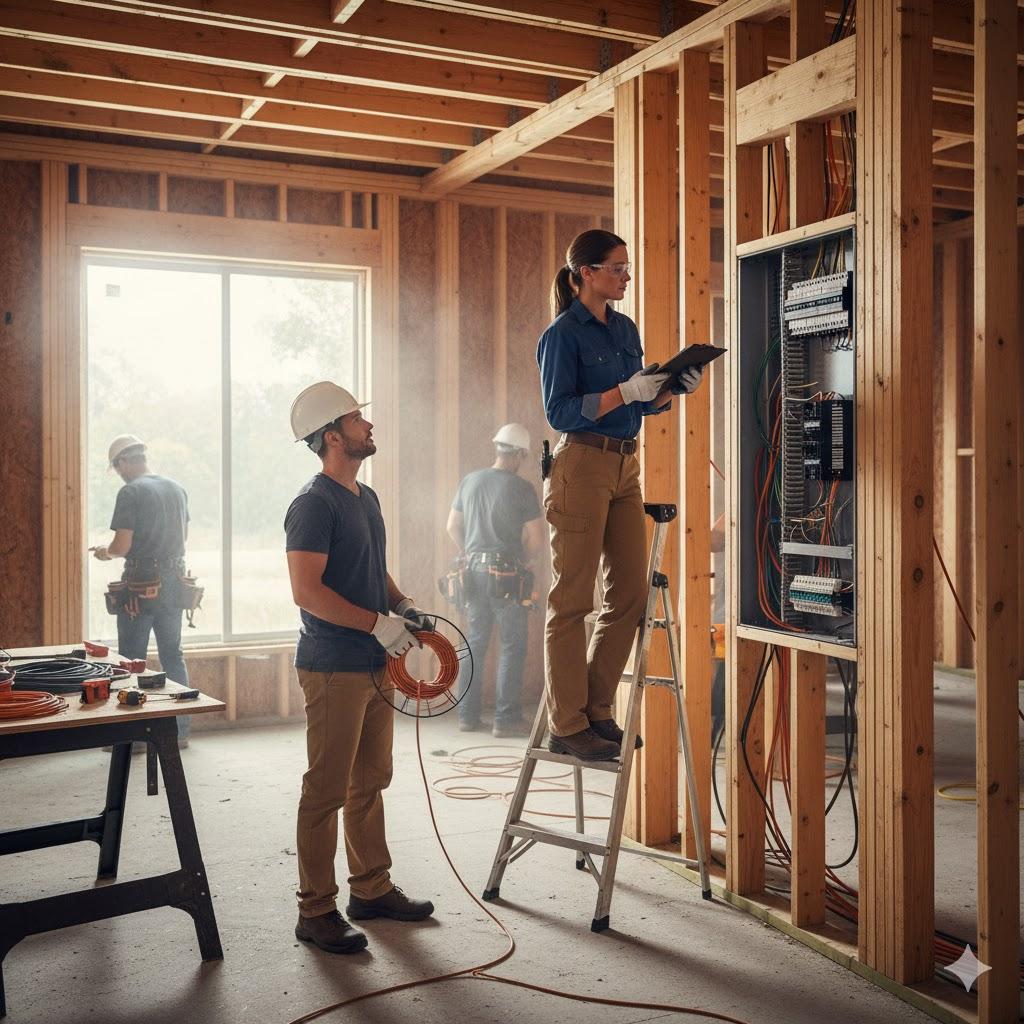
Planning a new home construction electrical checklist early in your build is one of the smartest things you can do to avoid headaches and expensive changes later. At Atomic Electric & Generators Inc., we help homeowners, builders, and designers create practical, code-compliant electrical plans that make everyday life easier, safer, and more convenient for years to come.
Below is a step-by-step checklist you can use to plan your new home’s electrical system before the walls are closed up.
1. Start with Your Lifestyle, Not Just the Floor Plan
Before you think about outlets and switches, think about how you’ll actually live in the space:
- Where will you charge phones, tablets, and laptops?
- Where will you watch TV or work from home?
- Do you like bright light or softer lighting in certain rooms?
- Will you entertain often, indoors or outdoors?
Grab a copy of your floor plan and walk through it (even if it’s only on paper), room by room, imagining a normal day. This will guide everything else in your electrical layout.
2. Plan the Main Electrical Service and Panel
Your main service size and panel will determine how much electrical load your home can support now and in the future.
Key questions to address with your electrician:
- Service size: Most modern homes need at least a 200-amp service, especially if you have electric heating, EV chargers, hot tubs, or large appliances.
- Panel location: The panel should be accessible, dry, and code-compliant — often in a garage, basement, or utility room.
- Future expansion: Ask for extra spaces in the panel so it’s easier to add circuits later for things like a workshop, EV charger, or backyard upgrade.
This is also the point to discuss whole-house surge protection and backup power options like generators.
3. Room-by-Room Outlet and Circuit Checklist
Kitchen
The kitchen is one of the most power-hungry rooms in the house. Make sure you plan for:
- Dedicated circuits for major appliances (refrigerator, microwave, dishwasher, garbage disposal, range).
- Multiple small appliance circuits for countertop use (toaster, coffee maker, air fryer, etc.).
- Code-compliant GFCI-protected outlets along the countertops.
- Outlets in logical spots for mixers, blenders, and small appliances you use often.
- Optional: An outlet inside a pantry, island, or appliance garage.
Bathrooms
Bathrooms require both safety and convenience:
- GFCI-protected outlets near each sink.
- Adequate lighting above and beside mirrors (vanity lights).
- Exhaust fan wired to a separate switch or timer.
- Consider an outlet near the toilet if you may install a bidet seat later.
Bedrooms and Living Areas
Think comfort and flexibility:
- Outlets on every wall, spaced per code, but also where you plan to put beds, nightstands, and entertainment centers.
- Switched receptacles or ceiling fixtures for general lighting.
- TV and media center locations with multiple outlets and cable/data as needed.
- Extra outlets for floor lamps, sound systems, and holiday décor.
Laundry Room
- Dedicated circuit for the washer.
- Dedicated 240V circuit for the dryer if electric.
- Adequate general lighting and at least one convenience outlet for irons or garment steamers.
Garage, Basement, and Utility Areas
- Dedicated circuits for tools, freezers, or extra refrigerators.
- Adequate task lighting over workbenches.
- GFCI protection where required.
- Consider a 240V outlet for welders, compressors, or EV chargers.
4. Lighting Plan: General, Task, and Accent
A good electrical plan doesn’t just ask, “Is there a light?” but “Is it the right light in the right place?”
Consider:
- General lighting: Recessed lights, flush-mount fixtures, or ceiling fans with lights.
- Task lighting: Under-cabinet lights in the kitchen, reading lights by beds, desk lighting in offices.
- Accent lighting: Stair lights, toe-kick lights, wall sconces, and exterior accent lighting to highlight architectural features.
Use three-way switches for hallways, stairs, and large rooms so you can control lights from multiple locations.
5. Safety Devices: GFCI, AFCI, Smoke & CO Detectors
Safety should be non-negotiable in your new home:
- GFCI (Ground Fault Circuit Interrupter) protection in kitchens, bathrooms, garages, basements, and outdoor areas.
- AFCI (Arc Fault Circuit Interrupter) protection in many living areas, per code, to reduce fire risk from arcing faults.
- Integrated smoke and carbon monoxide detectors wired in series, with battery backup, on each level and near sleeping areas.
Staying aligned with current National Electrical Code (NEC) standards is essential. For more details on safety requirements, you can review the NFPA’s electrical safety resources (outbound link).
6. Low-Voltage and Smart Home Wiring
It’s much easier to pull low-voltage wiring now instead of relying on Wi-Fi alone later.
Think about:
- Network (Ethernet) runs to home offices, media centers, and smart TVs.
- Pre-wiring for security cameras and alarm systems.
- Speaker wiring for whole-home or outdoor audio.
- Smart switches, dimmers, and thermostats that require a neutral wire.
Even if you don’t install all the devices immediately, running conduit or extra cabling now can save you money later.
7. Plan for Future Needs: EV Chargers, Generators, and More
Your electrical system should be ready to handle future upgrades:
- EV charging: A dedicated 240V circuit (often 40–60 amps) in the garage or driveway area.
- Backup power: Transfer switches and load management for a portable or standby generator.
- Outdoor living: Power for hot tubs, pools, outdoor kitchens, landscape lighting, and detached buildings.
If you’re considering backup power, this is a good time to talk with Atomic Electric & Generators Inc. about generator-ready wiring and panel configurations so you’re not retrofitting later at a higher cost.
8. Final Walkthrough Before Drywall
Before the drywall goes up, do a complete electrical walkthrough with your electrician:
- Confirm every outlet, switch, and fixture location.
- Check that heights and positions match your expectations (especially in the kitchen and bathrooms).
- Make sure boxes are where you want TVs, data jacks, and smart devices.
- Ask about any last-minute changes to support furniture layout or appliance choices.
Catching small issues at this stage is far cheaper than opening walls later.
9. Work with a Licensed, Local Electrical Contractor
Even with a detailed new home construction electrical checklist, execution matters. A licensed, experienced electrician will help you:
- Interpret and comply with local codes and utility requirements.
- Size your service and panel for your current and future loads.
- Suggest practical upgrades you might not know to ask for.
- Ensure safe, clean, and reliable installations that pass inspection the first time.
To see how a professional team can handle everything from planning to final inspection, you can explore Atomic Electric & Generators Inc.’s electrical services.
Ready to Plan Your Electrical System?
Building a new home is your chance to get the electrical system right from day one — with enough power, outlets, lighting, and safety features to match the way you live.
If you’re in the planning or framing stage and want expert guidance, Atomic Electric & Generators Inc. can review your plans, recommend improvements, and install a safe, code-compliant system you won’t have to second-guess later.
Reach out today to schedule a consultation and make sure your new home’s electrical system is ready for move-in, future upgrades, and everything life throws at it.