
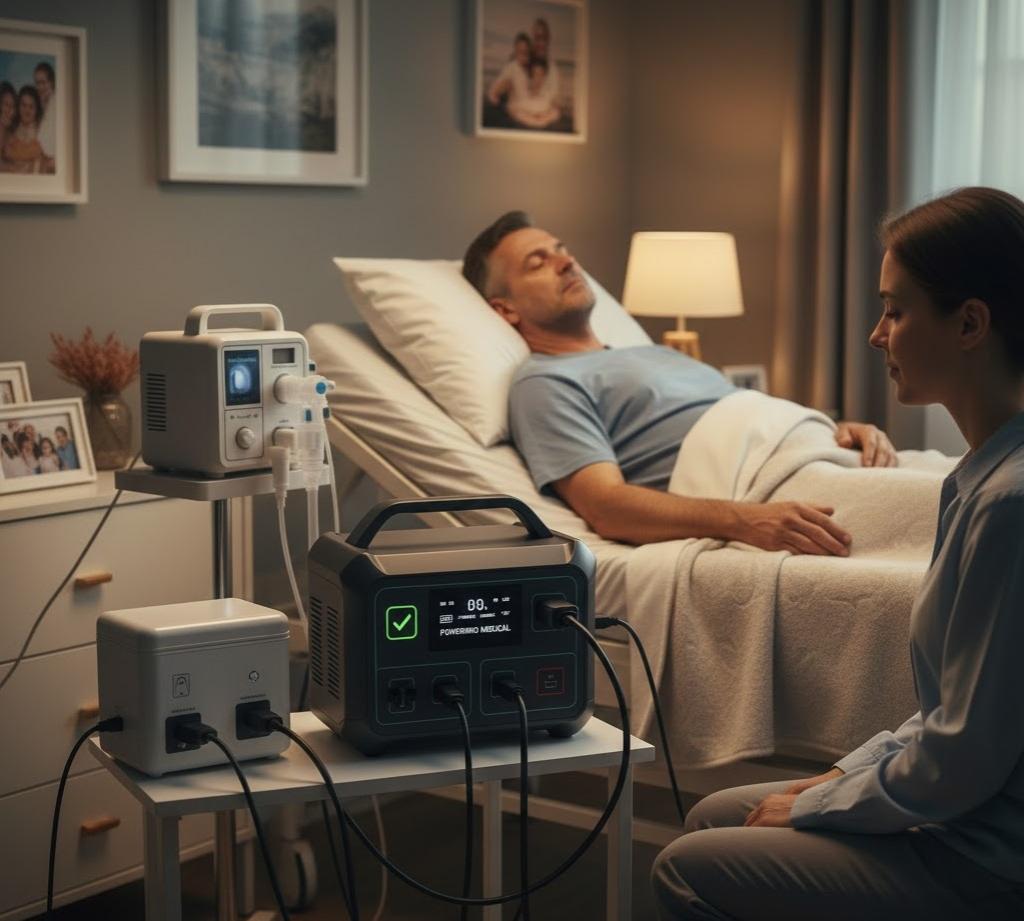
For families who rely on life-sustaining devices, having backup power for medical equipment isn’t a luxury—it’s a necessity. A sudden outage can put oxygen machines, ventilators, CPAP devices, feeding pumps, or powered hospital beds at risk. That’s why it’s so important to plan ahead, choose the right backup solution, and work with a licensed electrical contractor like Atomic Electric & Generators Inc. to make sure everything is installed safely and correctly.
In this guide, we’ll walk through when you need backup power, what options are available, how much you can expect to invest, and how to keep your system maintained and ready for emergencies.
Why Backup Power Matters for Home Medical Equipment
If someone in your home depends on powered medical equipment, even a short outage can create:
- Breathing difficulties if oxygen concentrators or ventilators shut down
- Sleep disruption and health risks if CPAP or BiPAP machines stop
- Interrupted medication or feeding schedules
- Safety issues for patients who need powered lifts or hospital beds
Beyond comfort, this can quickly turn into a medical emergency. That’s why many doctors, home health agencies, and equipment providers strongly recommend a reliable backup power plan.
Backup power gives you:
- Peace of mind knowing essential devices won’t cut off mid-use
- Time to respond in longer outages (decide whether to go to a hospital, call EMS, or relocate)
- Independence from constantly relying on friends, neighbors, or shelters during storms
Step One: Know What Needs Backup Power
Before you choose a backup system, make a simple “critical load” list. Write down:
- Each piece of medical equipment that needs power
- Its wattage (often found on a label or the user manual)
- How many hours per day it runs
- Any supporting equipment (e.g., Wi-Fi router for telehealth, phone chargers, a small lamp, refrigeration for medications)
Once you know your total power needs, an electrician at Atomic Electric & Generators Inc. can help size the right backup power solution for your home.
Backup Power Options for Medical Equipment
There are several ways to provide backup power at home. Each has pros, cons, and different price ranges.
1. Portable Generators
Portable generators are a common first step for backup power.
Pros:
- Lower upfront cost compared to whole-home systems
- Can be used to power a few critical circuits or devices
- Available in many sizes and fuel types (gasoline, propane, dual-fuel)
Cons:
- Must be started manually during an outage
- Require safe placement outdoors, with proper extension cords or a transfer switch
- Fuel needs to be stored safely and replenished
For medical equipment, it’s essential to connect portable generators through a transfer switch installed by a licensed electrician. This prevents dangerous backfeeding and keeps your home wiring safe.
2. Standby (Permanent) Generators
A standby generator is the most reliable option when life-sustaining equipment is involved.
Pros:
- Automatically turns on within seconds of a power outage
- Can power all or nearly all of your home, including medical devices
- Tied into natural gas or large propane tanks for long-duration outages
- Operates quietly and safely outside, with no cords to plug in
Cons:
- Higher upfront cost
- Requires professional installation, permits, and ongoing maintenance
For many families with critical medical needs, this investment offers unmatched peace of mind. Atomic Electric & Generators Inc. specializes in sizing, installing, and maintaining standby generator systems tailored to your home and medical equipment needs.
3. Battery Backup Systems and Power Stations
High-capacity battery backup systems, often called home power stations, are another option.
Pros:
- No fumes, quieter operation, and can be used indoors (depending on design)
- Instant power for sensitive electronics and smaller medical devices
- Can be recharged from the wall, solar panels, or a generator
Cons:
- Limited run time depending on size and load
- May not handle larger equipment like central AC or large hospital beds
- Upfront cost can be similar to, or higher than, some generators
Battery systems work especially well as part of a layered backup plan—for instance, keeping essential devices running instantly while a standby generator kicks on or while you prepare a portable generator.
Key Safety Considerations
When medical equipment is involved, safety and reliability matter more than ever.
- Avoid indoor generator use. Gas or diesel generators must never run inside a home, garage, or enclosed space because of deadly carbon monoxide risks.
- Use proper wiring and transfer equipment. Never plug a generator directly into a wall outlet. Always use a transfer switch and correct wiring installed by a licensed electrician.
- Prevent overloads. Plugging too many devices into a small generator or battery can cause it to shut down or overheat. Proper sizing is critical.
- Protect sensitive electronics. Many medical devices are sensitive to power quality. Surge protection, line conditioning, or inverter-based solutions can help protect equipment.
The team at Atomic Electric & Generators Inc. can design a system that prioritizes safety and respects the power needs of your specific medical equipment.
What Affects the Cost of Backup Power for Medical Equipment?
The overall investment for backup power depends on several factors:
- Type of system (portable generator, standby generator, battery backup, or a combination)
- Power capacity needed based on your medical load and household priorities
- Fuel source (gasoline, propane, natural gas, solar + battery)
- Electrical work required (transfer switch, subpanel, dedicated circuits, panel upgrades)
- Permits and inspections required in your local area
For example, adding a small portable generator and manual transfer switch will cost less than installing a whole-home standby generator with an automatic transfer switch. But if you have multiple essential devices or frequent outages, a larger investment may be more practical and safer long-term.
How Atomic Electric & Generators Inc. Can Help
Choosing backup power on your own can feel overwhelming—especially when a family member’s health is on the line. Atomic Electric & Generators Inc. helps you create a custom solution by:
- Reviewing your list of medical and household devices
- Calculating the required wattage and runtimes
- Recommending the right size and type of generator or battery system
- Installing transfer switches, dedicated circuits, and any necessary panel upgrades
- Providing ongoing maintenance, testing, and support so your backup system is ready before the next outage
You don’t have to guess your way through it. A licensed electrician will walk you through your options in plain language and design a system that fits your home, your budget, and your peace of mind.
Maintenance Tips to Keep Your Backup System Ready
Once your backup solution is installed, it needs basic care:
- Test your system regularly. Run generators or battery backups under load as recommended by the manufacturer.
- Schedule maintenance. Oil changes, filter replacements, and system inspections keep generators in good shape.
- Check fuel and connections. Make sure fuel is fresh, cords are in good condition, and transfer switches operate correctly.
- Review your medical needs annually. If new equipment is added or usage increases, you may need to adjust your backup plan.
Regular maintenance ensures that when the power goes out, your system works as expected—and your medical equipment stays on.
Take the Next Step Toward Safer Home Power
If you or a loved one relies on powered medical equipment, having a solid backup power plan isn’t optional—it’s part of your safety strategy. Whether you’re considering a portable generator, a full standby system, or a hybrid solution, Atomic Electric & Generators Inc. can help you make the smartest choice.
Talk with your healthcare provider about your equipment needs, then contact an electrical professional to design and install a reliable backup power system tailored to your home.